

Dog Training FAQs
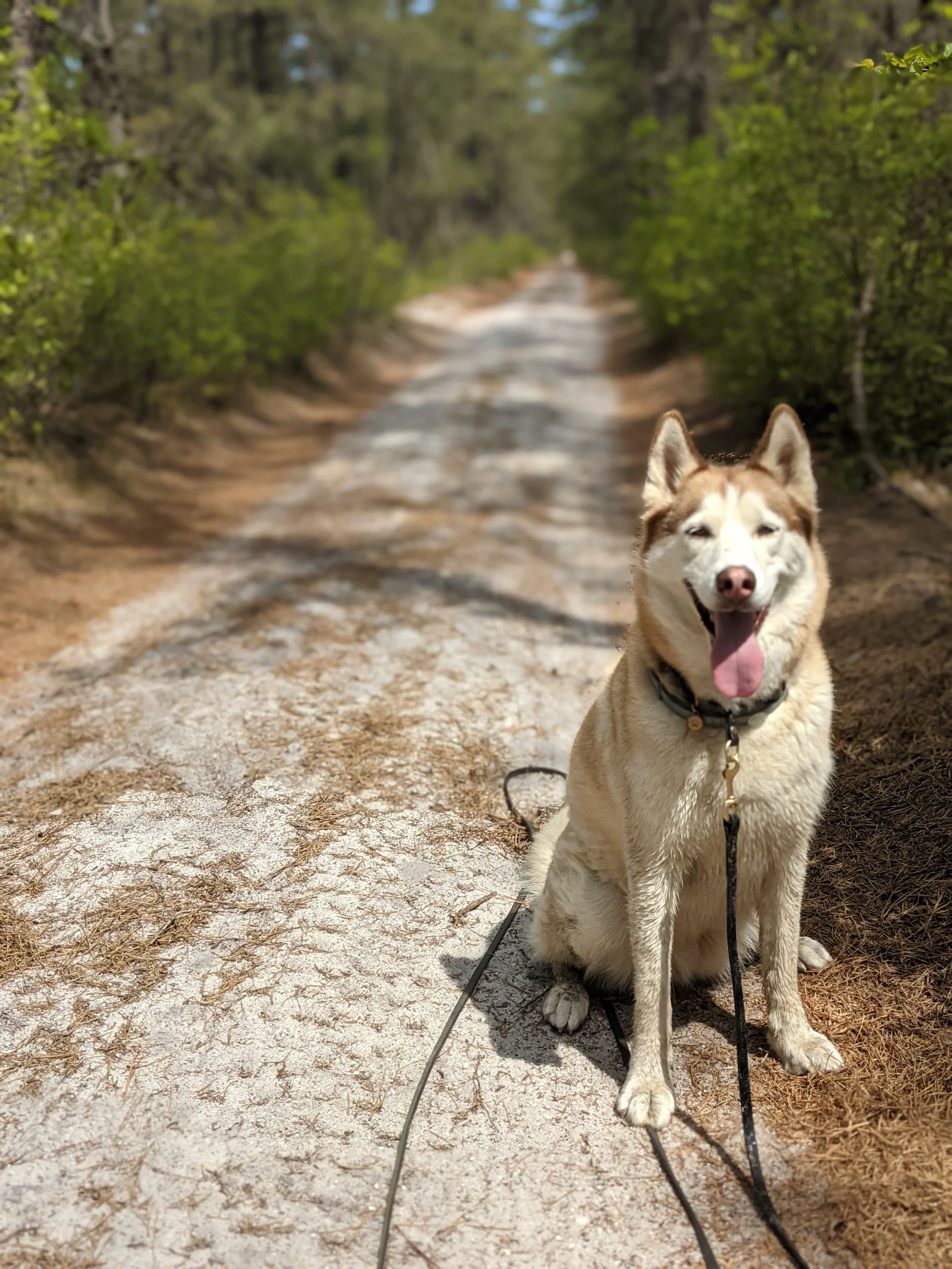
Why does my dog listen at home but not outside?
Because home is easy.
Your dog already knows the environment, understands the routine, and isn't trying to process dozens of new sights, smells, sounds, and distractions.
Outside, many dogs aren't choosing to ignore their owners. They're overwhelmed by the environment and don't yet have the skills to stay engaged.
Before we focus on obedience around distractions, we focus on helping dogs learn how to disengage, settle, and process the world around them. Once that foundation is in place, listening becomes much easier.
Why is my dog worse on walks than at home?
Walks combine movement, excitement, novelty, and stimulation all at once.
For some dogs, that creates the perfect recipe for pulling, barking, lunging, scanning, whining, and generally forgetting every skill they know.
The answer usually isn't more exercise.
It's helping the dog build emotional regulation, leash skills, and the ability to stay connected to their handler while navigating the environment.
Why won't my dog calm down in the house?
Many dogs are tired physically but not mentally settled.
Some dogs spend their entire day moving from one stimulating activity to another and never learn how to simply exist calmly.
Rest is a skill.
Learning to settle on a tether, relax in a crate, calmly observe the environment, and disengage from constant activity can dramatically improve a dog's ability to relax at home.
Does my dog need more exercise?
Maybe.
But many dogs don't need more activity. They need better balance.
A dog that is constantly overstimulated can look very similar to a dog that is under-exercised.
Before automatically adding more walks, fetch, daycare, or trips to the dog park, it's worth looking at whether your dog is getting enough rest, structure, and opportunities to practice calm behavior.
A lot of dogs are exhausted. They just don't know how to stop.
Why does my dog bark at visitors?
Most barking around visitors comes from excitement, uncertainty, frustration, or anxiety.
The barking itself is usually a symptom of a dog that doesn't know what they're supposed to do when people arrive.
We focus on creating clear expectations, building calm routines around guests, and helping dogs learn how to settle instead of making every arrival an emotional event.
Why does my dog pull on the leash?
Because pulling works.
Most dogs accidentally learn that pulling gets them where they want to go faster.
Loose leash walking isn't about forcing a dog into a perfect heel. It's about teaching them that staying connected to their handler is valuable and that paying attention opens doors to freedom.
Good leash skills create safer, calmer, and more enjoyable walks for everyone involved.
Why is my dog reactive on leash?
Leash reactivity can be caused by frustration, excitement, fear, uncertainty, or a combination of several factors.
Many reactive dogs are not aggressive.
They simply have strong feelings and limited coping skills.
Our goal is to help dogs build neutrality around people, dogs, and environmental triggers while teaching owners how to guide their dogs through challenging situations calmly and clearly.
Why does my dog ignore me at the park?
The park is competing with everything your dog loves.
Other dogs, wildlife, smells, movement, and open space are often more interesting than their owner.
That doesn't mean your dog is stubborn.
It usually means the environment is more difficult than the dog's current skill level.
Reliable attention and recall are built gradually through repetition, relationship, and practice in progressively more challenging environments.
Do I need a board and train?
Not necessarily.
Most dogs can make significant progress through coaching and consistent practice at home.
Board and train programs can be helpful when owners need additional support, faster progress, or help establishing new routines and skills.
The best program depends on your goals, schedule, budget, and dog.
What is the difference between a well-trained dog and a well-mannered dog?
A well-trained dog can perform commands.
A well-mannered dog can live life with you.
A dog that can sit on command is trained.
A dog that can enjoy dog friendly places such as relax at a brewery, settle on a hiking break, walk politely through town, and calmly greet visitors is well-mannered.
Our goal is not perfection.
Our goal is helping owners enjoy life with their dogs.
Can my dog learn to be calm?
Yes.
Calm isn't a personality trait reserved for a lucky few dogs.
Calm is a skill.
Some dogs naturally find it easier than others, but nearly every dog can improve their ability to settle, disengage, recover from excitement, and make better decisions in everyday life.
That's what we spend most of our time building.
Why Does My Dog Listen at Home But Not Outside?
Many dogs listen well at home because the environment is familiar and predictable. Outside, they're processing new smells, sounds, people, dogs, and movement all at once. The challenge is often not understanding the command but staying connected and making good decisions when the world gets interesting.
Why Does My Dog Ignore Me on Walks?
Dogs that ignore their owners on walks are often distracted, excited, or overwhelmed rather than stubborn. Walks can be full of competing information, making it harder for dogs to focus. Building engagement and helping dogs stay connected in distracting environments takes practice.
How Do I Get My Dog to Pay Attention Outside?
Start in environments where your dog can still be successful and gradually increase distractions over time. Reward check-ins, attention, and calm behavior. Many dogs need help learning that paying attention to their owner is valuable even when interesting things are happening around them.
How Do I Stop My Dog From Lunging at Other Dogs on Walks?
Lunging is often driven by excitement, frustration, anxiety, or a lack of coping skills around other dogs. Creating more distance, reducing overwhelm, and teaching calm observation can help dogs learn better responses. Progress comes from helping dogs stay under threshold and practice making thoughtful decisions around distractions.